

Car Elevator vs Concrete Ramp: Space-Saving Vehicle Access | Mutrade
Car Elevator vs Concrete Ramp
How developers, architects and parking operators can recover usable floor area by replacing long vehicle circulation routes with direct vertical vehicle transport.
Why compare a vehicle elevator with a concrete ramp?
In a multi-level parking project, the access method affects much more than construction cost. It determines circulation geometry, usable floor area, turning requirements and how much of the building can remain available for parking, retail, storage or workshop functions.
Car elevator or ramp: which approach fits the project?
| Factor | Car Elevator | Concrete Ramp |
|---|---|---|
| Floor-space demand | Compact vertical zone Concentrates access into a shaft/platform area. |
Requires an inclined run, approach zones and turning geometry. |
| Vertical connection | Direct floor-to-floor vehicle transfer. | Continuous vehicle movement along an inclined route. |
| Retrofit projects | Often easier to integrate where ramp space is unavailable. | Can require major structural reconfiguration. |
| Throughput | Sequential; one transfer cycle at a time. | Continuous and usually better for heavy traffic flow. |
| Architecture | Can be concealed or integrated into the floor plan. | Strongly influences building geometry. |
| Best suited to | Space-limited, premium, retrofit or specialized vehicle projects. | High-volume access where sufficient area is available. |
Where car elevators create the most value
Car dealerships
Connect showrooms, storage floors and service zones while preserving valuable display and inventory space.
Private residences
Provide discreet access to basement or lower-level garages where a visible ramp would compromise landscaping or architecture.
Workshops & service centers
Transfer vehicles between floors without devoting productive workshop area to a long ramp.
Commercial buildings
Create a dedicated vertical route for parking or service traffic in mixed-use developments.
Vehicle storage
Maximize usable storage area in multi-level car warehouses, collections and fleet facilities.
Existing buildings
Useful when retrofit geometry makes a conventional vehicle ramp difficult or inefficient to add.
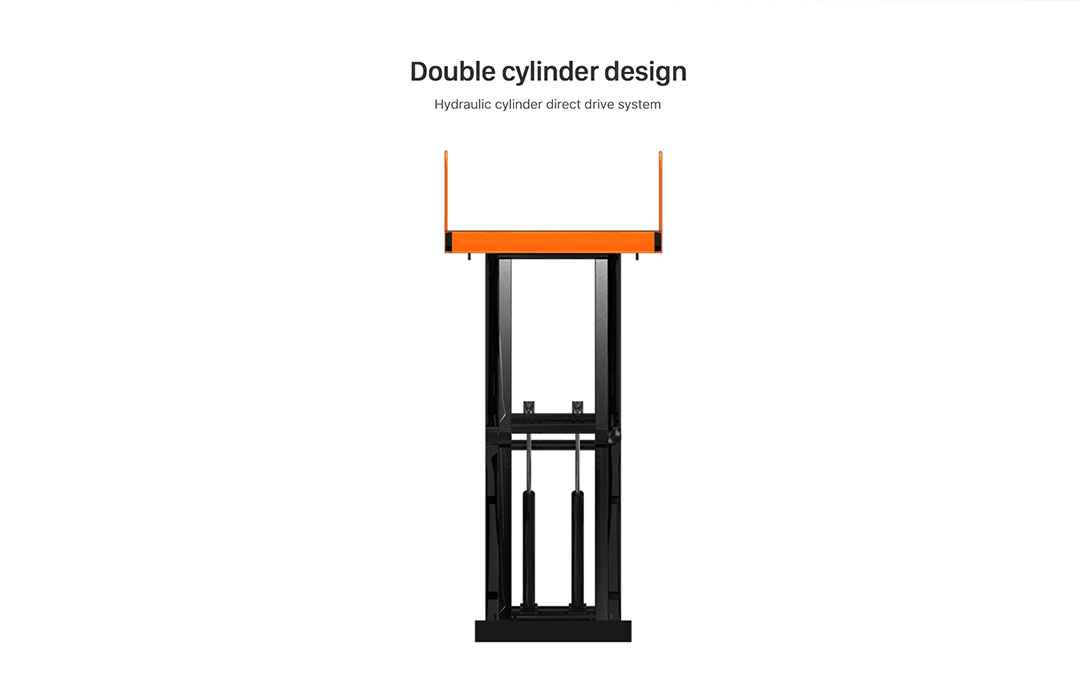
S-VRC — Scissor-type car elevator
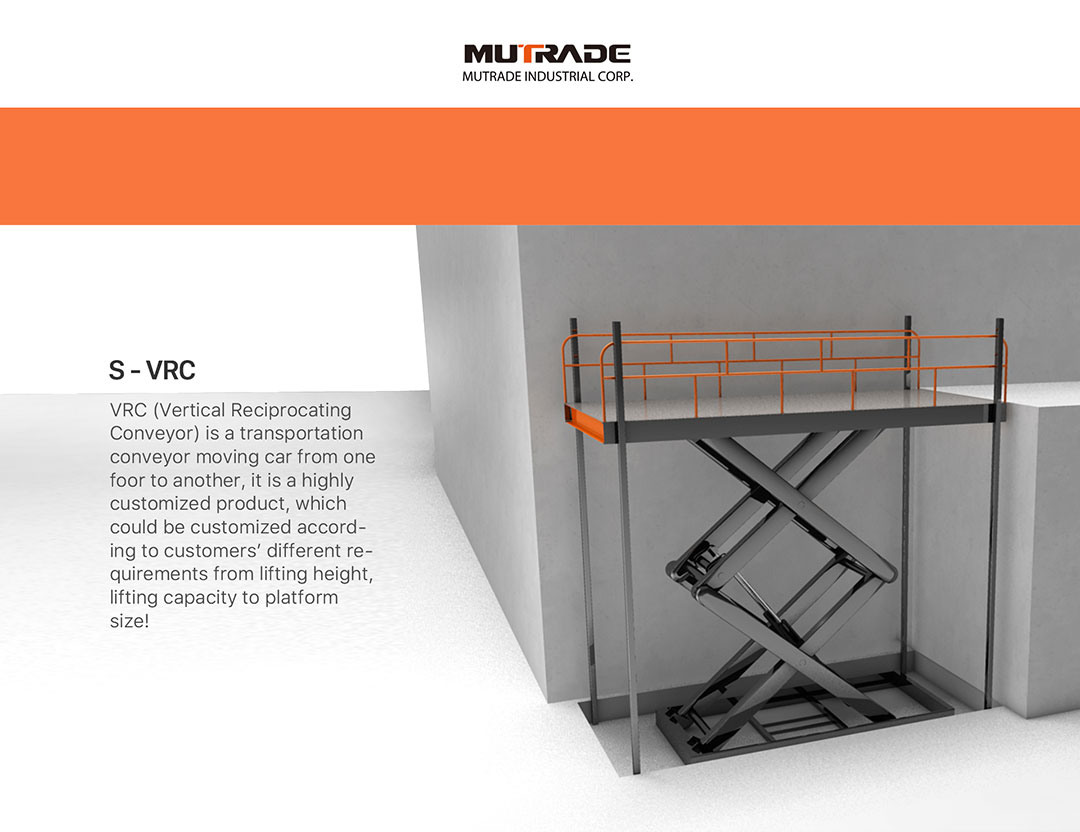
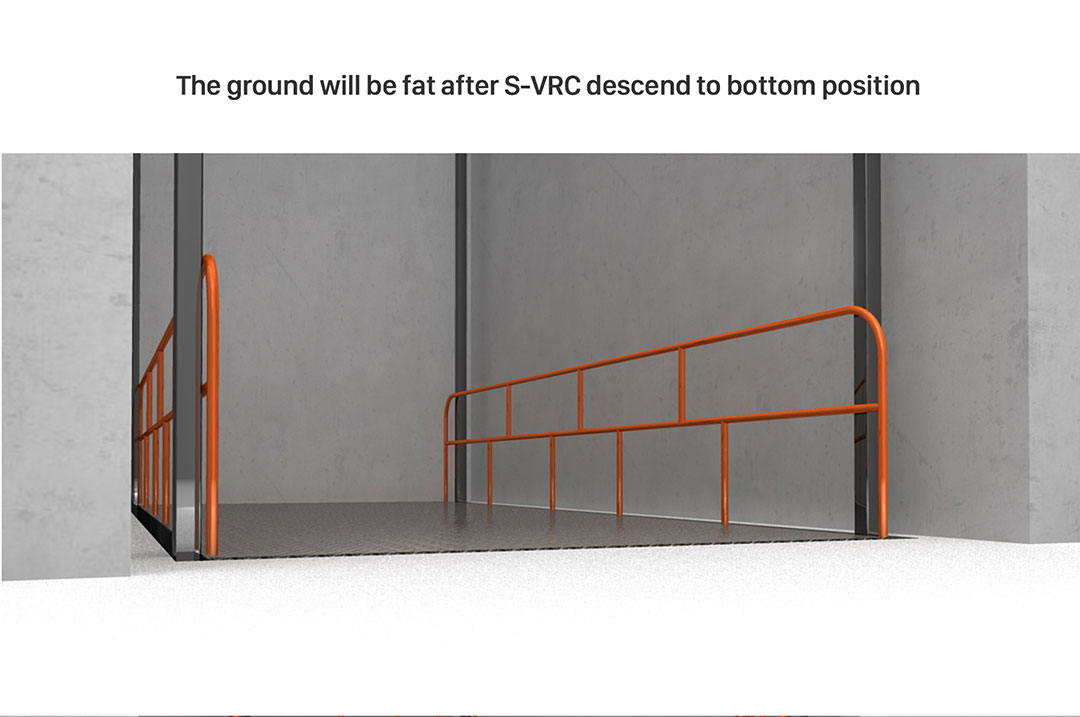
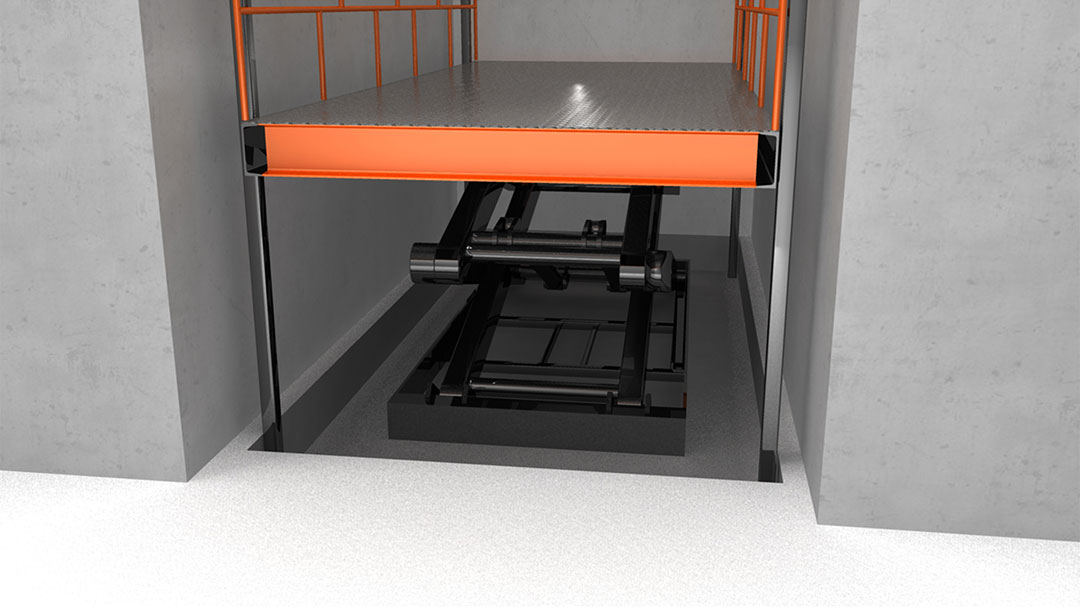
The S-VRC is a scissor-type Vertical Reciprocating Conveyor designed to move a vehicle or goods between floors. Mutrade positions it as a compact alternative to a conventional ramp, especially where the platform can be integrated into a pit and finished flush with the surrounding floor.
Best fit: private garages, premium residential projects, underground garages and applications where architectural concealment matters.
FP-VRC — Four-post vehicle elevator
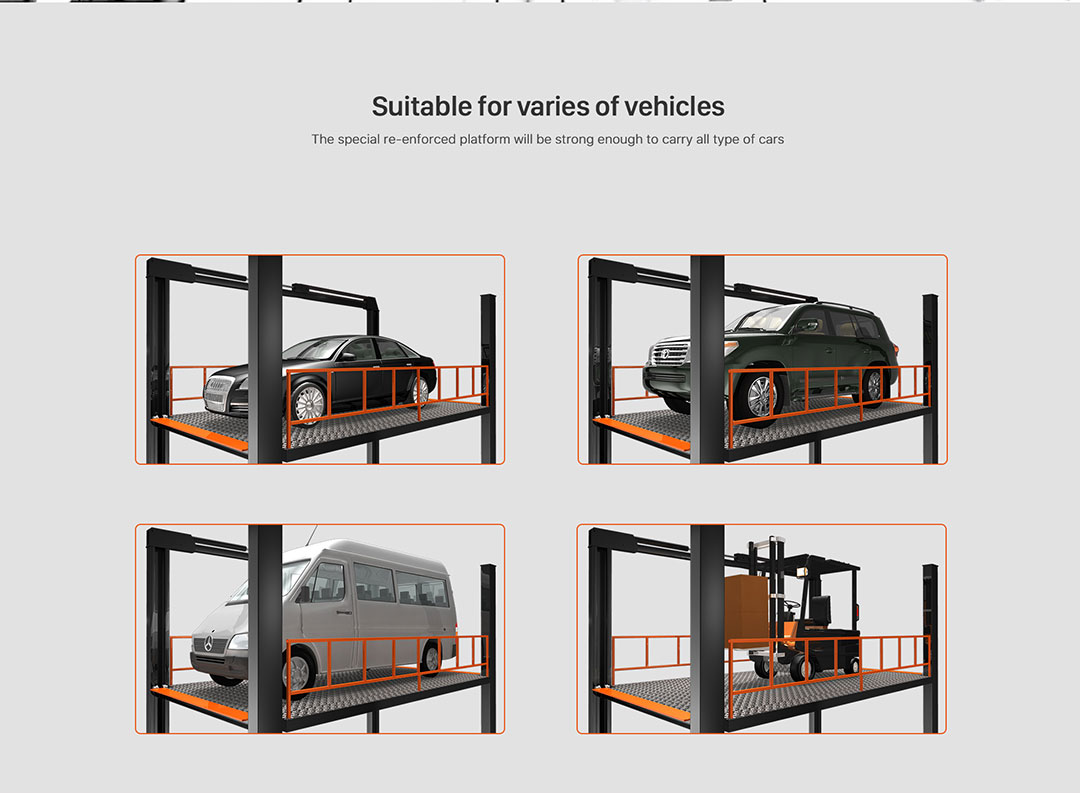
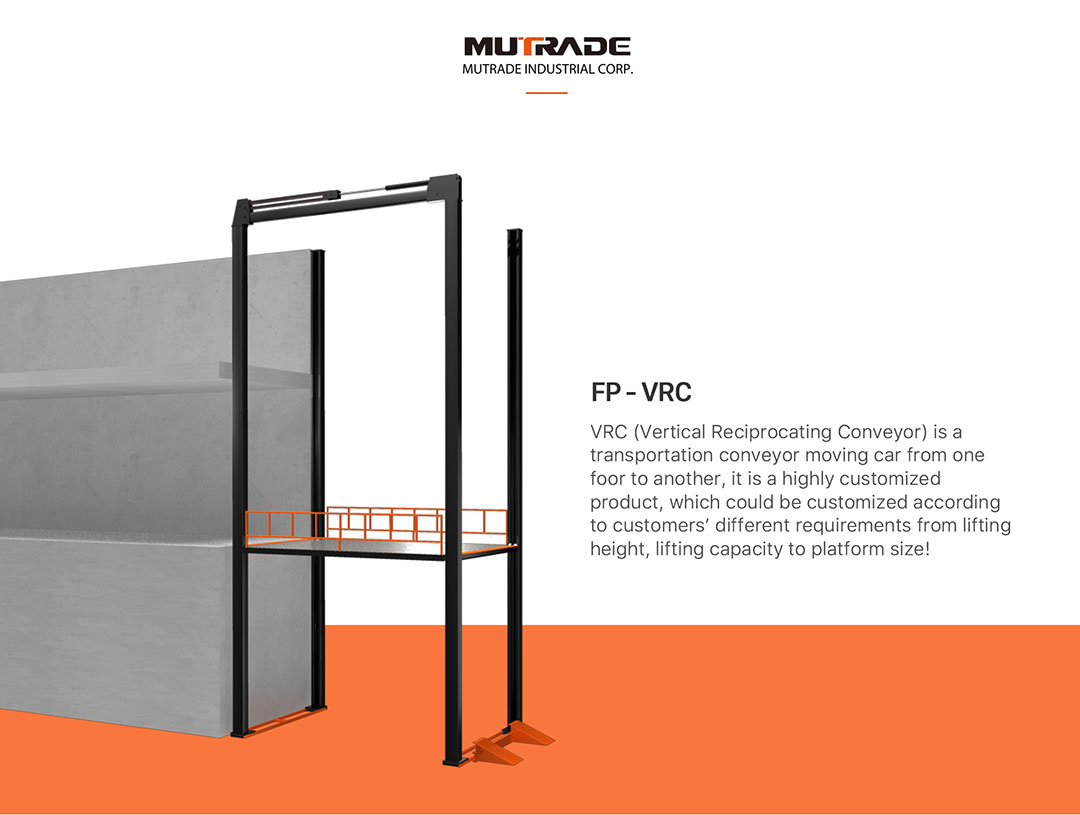
FP-VRC uses a self-supporting four-post structure with hydraulic drive and steel chains. It is intended for vehicle or goods transport between floors and can be configured with a shallow pit or, where project conditions require it, installed directly on the floor.
Best fit: dealerships, commercial buildings, workshops, industrial applications and projects where a robust self-supporting structure is preferred.
When should you choose a car elevator?
Consider a vehicle elevator when:
- The site is too compact for an efficient ramp.
- Basement access must remain discreet.
- Recovering usable floor area has commercial value.
- Vehicles must move between showroom, storage or service levels.
- An existing building is being converted or upgraded.
A ramp may remain preferable when:
- Vehicle flow is continuous and high-volume.
- Many vehicles must move simultaneously.
- Waiting time between transfers must be minimized.
- Sufficient land and building area are already available.
- The structural design is already optimized around a ramp.
Calculate the value of recovered floor area — not only equipment cost
The business case for a car elevator should compare the complete project impact. A concrete ramp influences not just its own footprint, but also approach zones, turning geometry and circulation lanes. If vertical vehicle transport releases area that can become parking, retail, storage, workshop or residential space, that recovered area should be included in the investment calculation.
Information required before selecting a vehicle elevator
A vehicle elevator is not a passenger elevator
Vehicle elevators are engineered around vehicle transport. For FP-VRC, Mutrade specifies that passengers must not be carried during operation. Safety devices, operating logic, site guarding and local compliance requirements should be evaluated as part of the final project design.
Questions developers and architects commonly ask
Can a car elevator replace a concrete ramp?
Yes, in suitable projects. It can provide direct vertical access and reduce the floor area required for conventional ramp circulation. The correct choice depends on traffic volume, project geometry and local requirements.
How much weight can a Mutrade car elevator carry?
Current official product data lists S-VRC configurations from 2,000 to 10,000 kg and FP-VRC configurations from 3,000 to 5,000 kg. Final capacity must be confirmed for the selected project configuration.
Can SUVs use a vehicle elevator?
Yes, if the selected platform size and rated load match the SUV's overall dimensions and weight.
Can a vehicle elevator be installed outdoors?
FP-VRC can be installed indoors or outdoors when the site dimensions and required equipment protection are suitable.
Can the platform size and lifting travel be customized?
Yes. Mutrade describes both S-VRC and FP-VRC as highly customized VRC products, with lifting height, capacity and platform dimensions selected around project requirements.
Can passengers remain inside the vehicle during travel?
For FP-VRC, passengers are not permitted during operation. Passenger transport requires a different elevator concept and regulatory approach.
Need to compare a ramp with a vehicle elevator for your building?
Send Mutrade your architectural plan, floor-to-floor height, maximum vehicle dimensions, expected traffic frequency and available shaft area. The engineering team can help evaluate the most practical vertical vehicle-access concept.
Post time: Aug-05-2026
